Power Plays
Ai Weiwei, galleries shutting in Iran, and one piece of good news… tax-related.


Welcome to Midnight Art Club!
This week, we’re skipping the abstract, philosophical, self-centred themes.
We’re talking power dynamics, borders that are being pushed a little too far, and censorship. But we end on good news. I swear.
OUR SELECTION OF THIS WEEK’S NEWS
• Ai Weiwei defends Beijing’s stance on Taiwan.
In an interview published on January 15, 2026, he says Taiwan is “territorially” part of China, and adds that he doesn’t think the island has “that much freedom.” Yes, it’s brutal. And yes, it’s surprising coming from an artist who, in the West, has become a global symbol of dissent.
• In Iran, galleries are closing or putting everything on hold.
Several galleries have shut their doors or paused projects amid protests and communication blackouts. One gallerist says they initially wanted to stay open, believing galleries should remain spaces for dialogue, then closed when arrests and deaths mounted, in solidarity with a wider shutdown (shops, cafés, the bazaar). Since then: fear, uncertainty, low morale, and a cultural sector that feels painfully fragile.
• In the UK, you can pay part of your taxes with artworks.
Instead of a cheque, you donate a work considered nationally important: the state wipes the equivalent tax bill, then places the work in a museum. Result: public collections grow without buying, and donors reduce their taxes. In 2024–2025, the total reached £59.7 M, including a Degas, works by Ben Nicholson, and photographs by Bill Brandt.
TO KNOW – Ai Weiwei, the artist who won’t stay in his lane
Ai Weiwei is an artist who understood early on that images, objects, and circulation can be weapons.
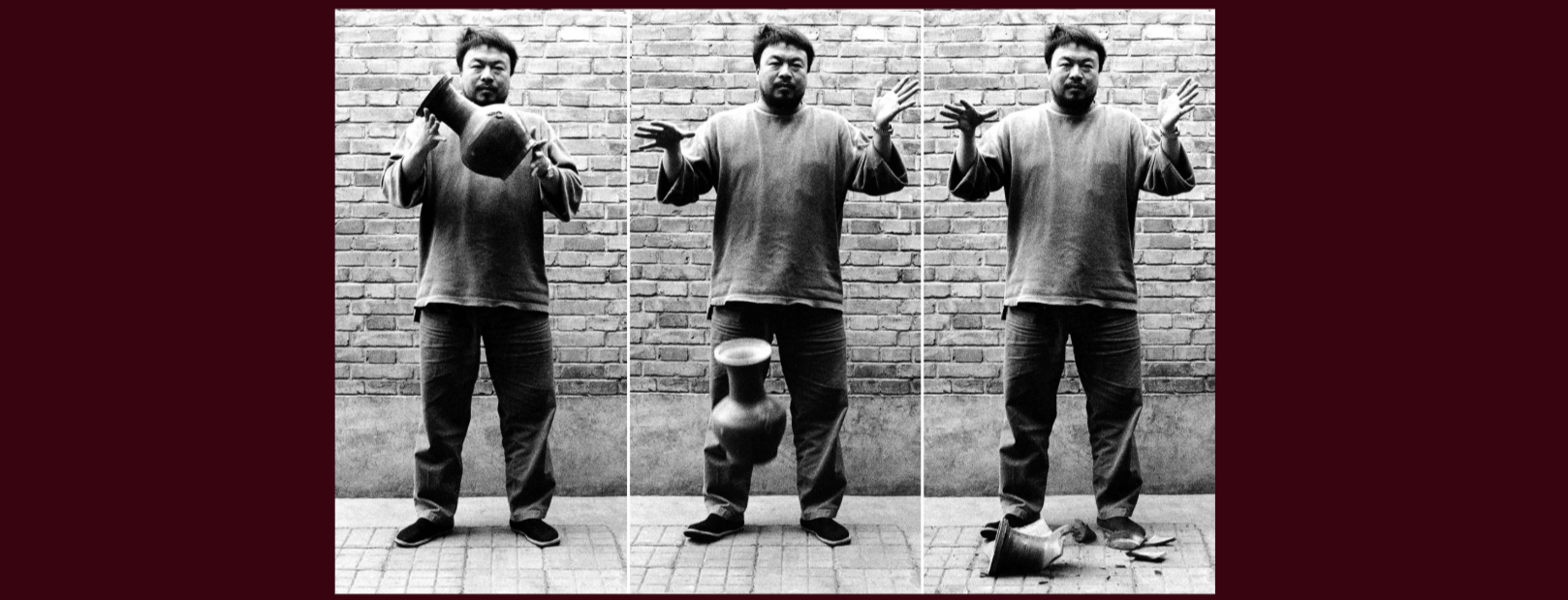
He became famous through shockingly simple gestures aimed straight at Chinese heritage. In 1995, for instance, he drops a Han Dynasty urn (a real one) and photographs the fall in three frames. One clean action, instant scandal.
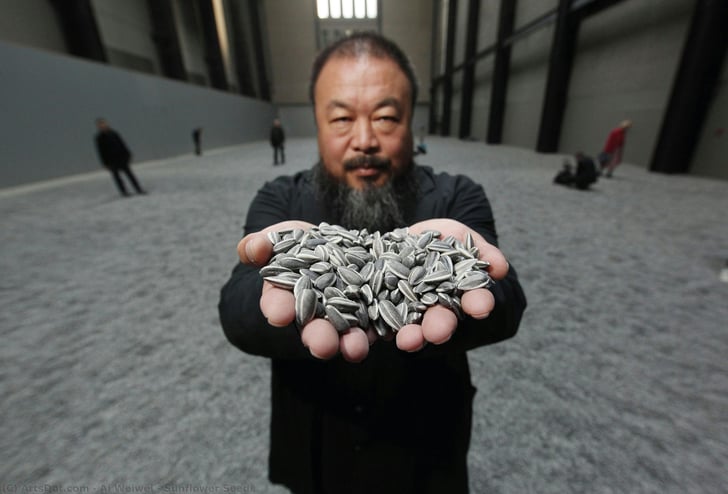
Then he scales up. At Tate Modern, Sunflower Seedsis millions of hand-made, hand-painted porcelain sunflower seeds. From far away, a grey sea. Up close, every seed is different. It’s beautiful, almost hypnotic, and it speaks to China as the “factory of the world” and to invisible labour.
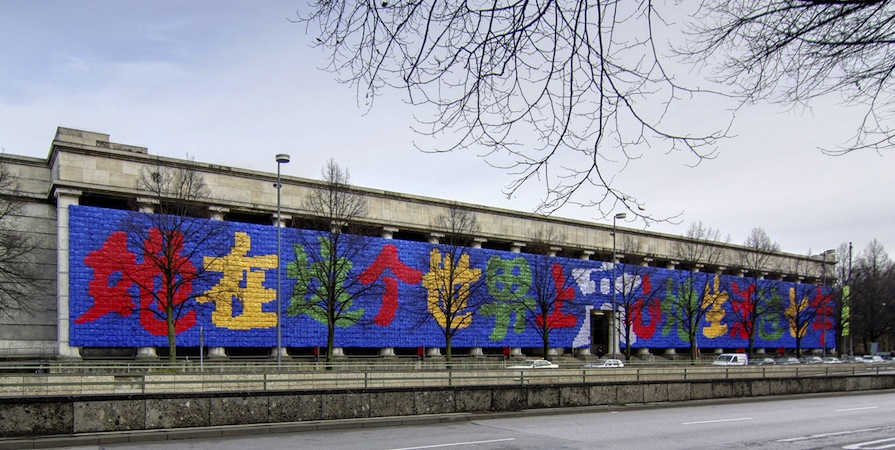
Sometimes his work becomes a memorial. After the Sichuan earthquake, one thing obsesses him: the children who died when schools collapsed. He turns that anger into a public monument: 9,000 backpacks on the façade of Haus der Kunst in Munich, spelling out the sentence: “She lived happily for seven years in this world”, a line taken from a mother’s note.
Today, he’s also a market figure: he shows and sells through major galleries, including Vito Schnabel in New York, who exhibits him regularly.
In short: Ai Weiwei makes images that hit fast and stay in your head, while living a life where art and politics are never separate.
THE POLITICAL GOSSIP – His activism, and what it cost him
With Ai Weiwei, “gossip” isn’t light. It’s the story of an artist who paid dearly for his opinions, and didn’t back down.
As I said above, after the Sichuan earthquake, when the authorities avoid counting the victims, Ai Weiwei does the opposite: he collects names, publishes them, insists. He’s shining a harsh light exactly where power wants darkness.
From there, things harden. He faces harassment and police violence (one beating leads to a brain haemorrhage and surgery). In 2011, he’s arrested at Beijing airport and held for 81 days. Then: passport confiscated, travel blocked, constant surveillance.
He also criticises Europe over migration (he even closed a show in Denmark in protest of a law targeting asylum seekers).
And the irony is: the crackdown backfired. Every attempt to silence him made him louder.
And now he adds a new layer that unsettles a lot of people: in The Times, he defends Beijing’s stance on Taiwan. In other words, he remains unpredictable.
Moral of the story: in contemporary art, as paradoxical as it sounds, censorship doesn’t always erase. Sometimes it amplifies.
THIS WEEK’S RECS
in New York:
Museum: Gabriele Münter: Contours of a World, Guggenheim, through April 26, 2026
A major early 20th-century painter too often reduced to “Kandinsky’s partner.”Gallery: Wang Guangle: Delayed Gravity, Pace Gallery, through February 28, 2026
Ten very restrained, near-monochrome paintings built from layered coats of paint: up close you see the strata; from afar it reads as a clean, almost sculpted surface.
in Paris:
Museum: 1925-2025. Cent ans d’Art déco, Musée d’Art Décoratif de Paris, through April 26, 2026
A brilliant show that traces the story of decorative arts: inspirations, beginnings, codes… You pass through other movements too, like Art Nouveau, which makes it much easier to see where Art Deco really comes from. I visited with a very knowledgeable friend and it changed everything. So yes: get an audio guide, or better, the human equivalent.Gallery: Tendres débris, Galerie GP & N Vallois, through March 7, 2026
A group show turning leftovers into artworks: torn posters, found objects, plastic, cigarette butts. You’ll see figures linked to Nouveau Réalisme (Arman, César, Villeglé, Hains, Dufrêne, Tinguely, Niki de Saint Phalle) alongside more recent artists, all tied by one simple idea: to turn a pumpkin into a carriage, or trash into something worth thinking about.
to watch:
Documentary : Ai Weiwei: Never Sorry(2012)
With his energy and sharp humour, Ai Weiwei is never quite where you expect him. The director sticks close, camera on his heels, following the day-to-day of his actions and his work.
See you next week… same day, same time!
Juliette,
To contact me : info.midnightartclub@gmail.com
...
Midnight Art Club - Art, Unfiltered
Midnight Art Club - Art, Unfiltered